



PRT Injection in Berlin
Periradicular therapy to treat radiating back pain
- PRT for periradicular pain in the spine
- Targeted injection at the affected nerve root
- Treatment by experienced orthopedic specialists
A PRT, short for periradicular therapy, is a targeted injection at a nerve root of the spine. It can be an option when back pain radiates into a leg or an arm and the pain is partly caused by an irritated or compressed nerve root.
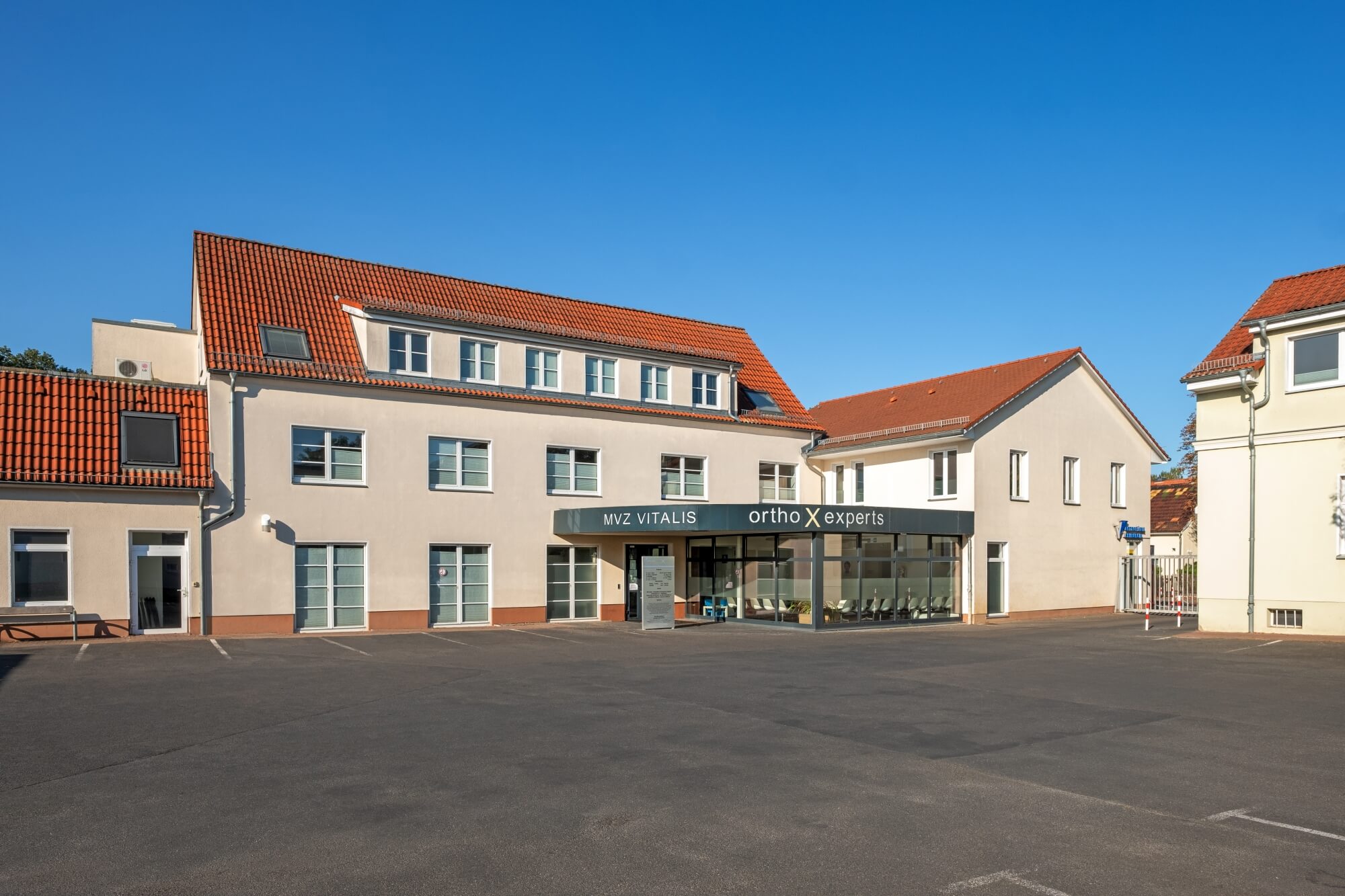
Common causes include a herniated disc, a bulging disc or degenerative changes in the spine. At MVZ VITALIS in Berlin-Buckow, we assess as part of the orthopedic diagnosis whether a PRT injection or spinal infiltration makes sense for your complaints.
When PRT can be useful
PRT is particularly suitable for pain that can be attributed to a specific nerve root. Such complaints are also referred to as radicular or periradicular pain. Typically, the pain does not stay localized in the back but radiates along a nerve.
With complaints in the lumbar spine, pain can radiate into the buttocks, the leg or down to the foot, for example. In the cervical spine, pain can radiate into the shoulder, arm or hand. Tingling, numbness or an electric shock-like pain are often present as well.
Typical areas of application include:
When disc tissue presses on or irritates a nerve root, PRT can help influence the inflammatory reaction and pain at the affected nerve root.
A bulging disc can also irritate a nerve root. Whether PRT makes sense depends on whether the complaints clearly match the affected nerve structure.
PRT can be considered when pain, tingling or numbness point to a specific nerve root.
Osteoarthritis in the small facet joints, bony growths or a narrowing of the nerve exit can irritate nerves. Here, too, targeted infiltration can be part of pain therapy.
If back pain repeatedly radiates into the arm or leg and conservative measures alone do not help sufficiently, PRT can be an option as a further treatment step.
Diagnosis as the basis for spinal infiltration
Not every back pain is suitable for periradicular therapy. Localized back pain without clear nerve root irritation is treated differently from radiating pain caused by a herniated disc or a narrowing in the spine.
That is why a thorough orthopedic examination comes before treatment. Our specialists assess the course of pain, mobility, reflexes, strength, sensation and possible neurological abnormalities. Depending on the findings, MRI, X-rays or other tests may be necessary.
Only when the complaints, examination and imaging are consistent can we decide whether spinal infiltration with a PRT injection makes sense. This way, we avoid injecting a structure that is not the main cause of the complaints.
How periradicular therapy works
In PRT, a thin needle is guided precisely to the vicinity of the affected nerve root. There, a local anesthetic and an anti-inflammatory medication are usually administered to reduce irritation and relieve pain.
The treatment is carefully planned, and depending on the situation, image guidance may be necessary. After the injection, patients usually stay for a short period of observation. Since the treated area may temporarily feel numb, heavy or unusual, you should not drive yourself afterwards and should arrange for someone to accompany you or pick you up.
PRT as part of conservative pain therapy
With a herniated disc, chronic back pain or recurring complaints, several factors often interact: nerve irritation, muscles, mobility, posture and strain in everyday life. At MVZ VITALIS, we therefore consider PRT to be one possible component of conservative orthopedics and pain therapy. Depending on the findings, other measures may be useful, such as physiotherapy, physical therapy, chiropractic therapy, pain medication or targeted exercises.
Infiltration therapy can relieve pain and make movement easier again. However, it does not always replace treatment of the underlying cause. In the case of paralysis, increasing neurological deficits or certain serious findings, further evaluation is necessary.
Good to know for patients
FAQ about periradicular therapy
PRT stands for periradicular therapy. An injection is placed precisely near a nerve root in the spine. The treatment can be an option for radiating back pain when an irritated nerve root is involved.
PRT can be useful when the diagnosis, complaints and imaging are consistent. It is particularly important that the pain actually originates from a specific nerve root. For purely localized back pain without nerve root irritation, a different treatment is usually more suitable.
Possible side effects include temporary pain at the injection site, bruising, numbness, a feeling of warmth, circulatory reactions or a short-term worsening of complaints. Rarely, bleeding, infections or nerve injuries can occur. That is why the treatment is performed after a careful assessment of the indication and under hygienic conditions.
After a PRT, you should take it easy on the day of treatment. It is often recommended not to plan any heavy physical exertion, sports or long trips. How long rest is advisable depends on the findings and on how you respond to the injection. Our specialists can give you specific recommendations as part of the treatment.
Directly after a PRT, you should not drive yourself, because the anesthetic can temporarily affect sensation, strength or reaction time. Sports, heavy lifting, physically demanding work and heavy strain should be avoided on the day of treatment. You will receive more detailed recommendations as part of the treatment.
The duration of the effect varies from person to person. Some patients feel only short-term relief, while others benefit for weeks or longer. What matters are the cause, the extent of nerve irritation and further treatment measures.
A general success rate cannot be stated in a reliable way. The effect depends heavily on whether the right nerve root is treated, how severe the irritation is and what the underlying cause is. According to guidelines, a targeted injection at the nerve root can be a useful treatment option for radicular pain caused by a herniated disc.
The number depends on the complaints, the course of the condition and the medications used. Often, a few targeted injections are planned and their effect is evaluated afterwards.
In PRT, the injection is placed near a nerve root. It is mainly an option for radiating pain. In facet joint infiltration, the small joints of the spine are treated, which can cause localized back pain due to wear or osteoarthritis.
Whether the costs are covered depends on your insurance, the diagnosis, the medical justification and how the treatment is performed. We will inform you before treatment begins if there are any costs or if it makes sense to clarify coverage with your health insurance.
Would you like to find out whether a PRT injection is an option for your back pain or radiating complaints? Then feel free to book an appointment for a consultation at MVZ VITALIS in Berlin-Buckow.
Book a consultation now
Do you have back pain that radiates into your leg, buttocks, shoulder or arm, or down to your hand or foot? Is a herniated disc or an irritated nerve root suspected? Then feel free to book an appointment for a consultation with our specialists at MVZ VITALIS, Center for Orthopedics and Pain Therapy in Berlin-Buckow.