



Bone Density Measurement in Berlin
DXA scan to assess osteoporosis and increased fracture risk
- Bone density measurement for suspected osteoporosis
- Low-radiation DXA method for measuring bone density
- Diagnostics and osteoporosis treatment by experienced orthopedic specialists
Osteoporosis, also known as bone loss, often develops unnoticed over a long period of time. The bones lose density and stability. This increases the risk of fractures, sometimes even under minor strain or after minor falls.
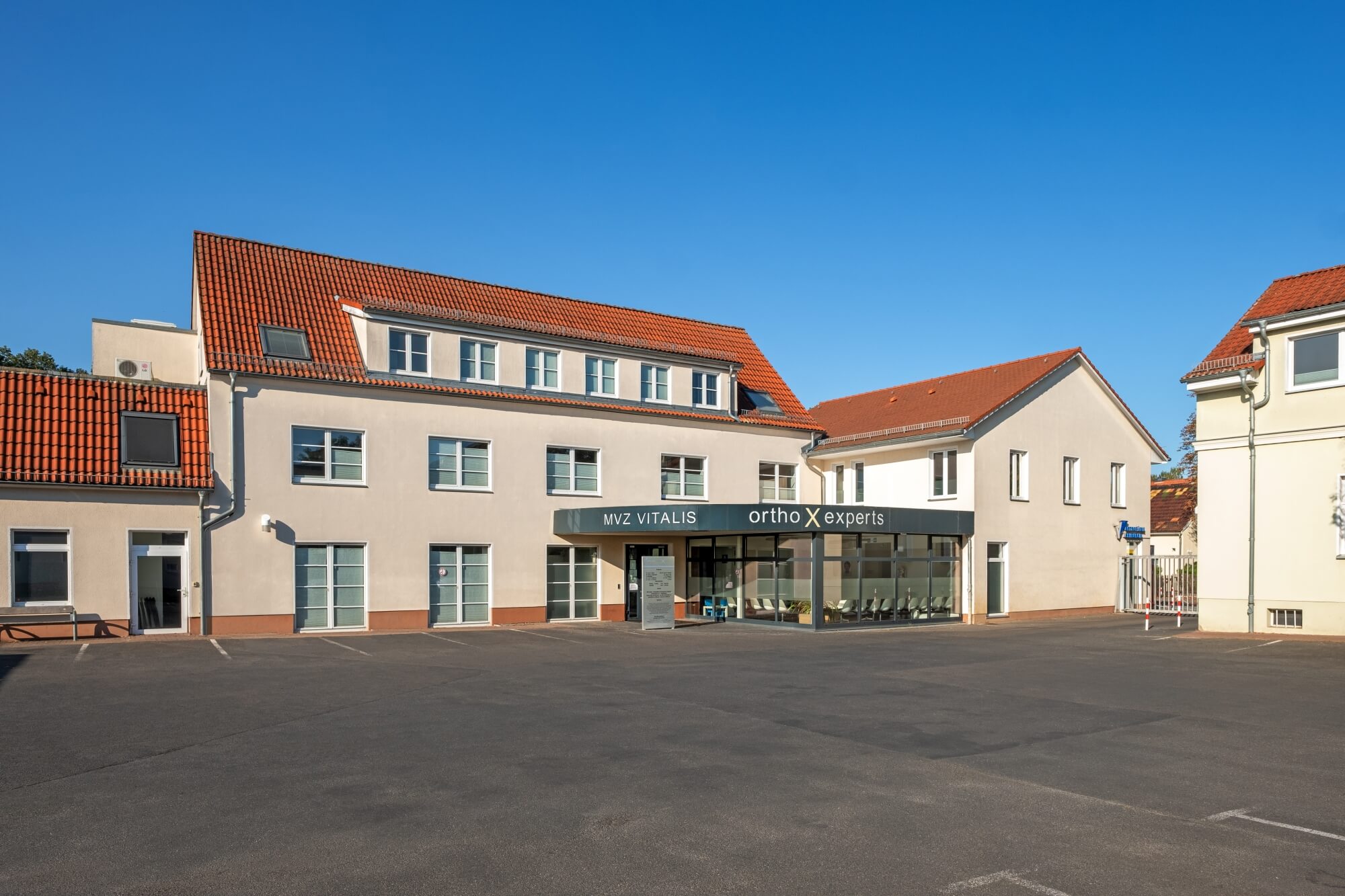
A bone density measurement can help to better assess the risk and detect osteoporosis at an early stage. At MVZ VITALIS in Berlin-Buckow, we use the DXA method to assess bone density at typical measurement sites.
The examination may be useful if risk factors are present, fractures have already occurred or osteoporosis treatment is planned or needs to be monitored.
Purpose of bone density measurement
A bone density measurement examines how mineralized and stable the bone is. The medical term for this is osteodensitometry. The measurement indicates whether bone density is normal, reduced or whether osteoporosis is present.
The examination is particularly important because osteoporosis does not always cause symptoms early on. The condition is often only noticed once a fracture has already occurred. Timely diagnostics can help to better assess your personal fracture risk and to decide on suitable measures against osteoporosis as early as possible.
DXA method: the standard procedure for measuring bone density
The DXA method, also known as DEXA, is the most commonly used procedure for measuring bone density. DXA stands for "dual-energy X-ray absorptiometry". It uses very low-dose X-rays to measure how dense the bone is. The radiation exposure of a DXA scan is very low. The examination is painless, usually takes only a few minutes and requires no elaborate preparation.
Measurements are usually taken at the lumbar spine and the hip. These areas are particularly important because osteoporotic fractures of the spine and the bones near the hip are especially relevant from a medical point of view.
When does a bone density measurement make sense?
A bone density measurement may make sense if osteoporosis is suspected or the risk of fractures is increased. Whether a measurement is recommended in an individual case depends on age, symptoms, pre-existing conditions, medications and other risk factors.
Common reasons for a bone density measurement include:
For example, with back pain, loss of height, a rounded back or signs of vertebral fractures.
If a bone breaks without a significant accident, osteoporosis should be ruled out.
These include older age, family history, lack of exercise, being underweight, smoking, certain chronic diseases or long-term use of cortisone.
After menopause, women have an increased risk of declining bone density.
If treatment is already underway, the measurement can help to assess its progress.
What values does a bone density measurement provide?
The result of the DXA scan is given, among other things, as a so-called T-score. This value compares the measured bone density with the bone density of young, healthy adults.
The lower the T-score, the lower the bone density. The following ranges are often used as a guide:
Important: The measured value alone does not determine treatment. Age, previous fractures, concomitant conditions, medications and other risk factors must also be taken into account. This is why at MVZ VITALIS the result is always interpreted by a physician and considered in light of your personal situation.
Bone density is unremarkable and within the normal range.
Bone density is mildly to moderately reduced. Osteopenia is also referred to as low bone mass and can be a precursor to osteoporosis.
Bone density is significantly reduced. This increases the risk of fractures.
Established (manifest) osteoporosis is diagnosed when the T-score is -2.5 or lower and osteoporotic fractures have already occurred, for example in the vertebrae.
Bone density measurement and osteoporosis treatment from a single source
At MVZ VITALIS, bone density measurement is closely linked to further orthopedic treatment. After the diagnostics, our specialists interpret the results and advise you on whether osteoporosis is present, how high your personal risk is and which treatment may be appropriate.
This is particularly important because osteoporosis should often not be considered in isolation. Back pain, vertebral fractures, risk of falling, mobility, muscle strength, concomitant conditions and medications can all play a role in treatment planning.
This way, you receive not just a measured value but a specialist assessment and a recommendation for how to proceed.
Good to know for patients
FAQ on bone density measurement
Bone density measurement is straightforward and painless. During the examination, you lie still on an examination table. The device moves over the area being examined and records the bone density.
The lumbar spine and hip are usually measured. The examination usually takes only a few minutes. The measured values are then assessed by a physician and considered together with other risk factors.
As a rule, you do not need to fast for a bone density measurement. Please bring any previous findings, doctor's letters, earlier measurements or information about medications, if available.
A bone density measurement may make sense if osteoporosis is suspected or there is an increased risk of fractures. This may be the case, for example, with previous fractures after minor strain, older age, long-term use of cortisone, being underweight, family history or certain chronic diseases.
If the bone density measurement shows signs of reduced bone density or osteoporosis, we discuss the next steps with you. This is not only about the measured value but about your personal risk of fractures.
Depending on the findings, further examinations, lab tests, lifestyle adjustments or targeted osteoporosis treatment may be appropriate. These include, for example, exercise, muscle strengthening, fall prevention, adequate calcium and vitamin D intake or medication.
DXA bone density measurement uses very low-dose X-rays. The radiation exposure is low. Nevertheless, the examination should only be performed if it makes medical sense.
In everyday use, DXA and DEXA usually refer to the same procedure. Both terms stand for bone density measurement using "dual-energy X-ray absorptiometry". In medicine, the abbreviation DXA is commonly used.
Whether your health insurance covers the costs depends on the medical justification and your insurance. For patients with statutory health insurance, the costs may be covered in certain cases, for example if there is a corresponding suspicion or certain risk factors. We will inform you in advance if costs will be incurred or if it makes sense to check with your health insurance.
This depends on the initial findings, your personal risk and whether osteoporosis treatment is already underway. Repeat measurements should only be performed if the result is relevant for further treatment.
Would you like to find out whether a bone density measurement makes sense for you? Then feel free to book an appointment at MVZ VITALIS in Berlin-Buckow.
Book a bone density measurement now
Would you like to have your bone density checked, or do you have risk factors for osteoporosis? Then feel free to book an appointment at MVZ VITALIS, Center for Orthopedics and Pain Therapy in Berlin-Buckow.
Our specialists will determine whether a bone density measurement makes sense in your case and what further steps follow from the result.