



Knee Replacement Surgery in Berlin
Artificial knee joint for advanced knee osteoarthritis and severe knee pain
- Consultation on knee replacement for advanced osteoarthritis
- Implantation of partial and total knee replacements
- Surgery by knee specialist Prof. Dr. med. Hanno Steckel
When the knee joint is severely worn, pain, swelling and limited mobility can significantly affect everyday life. Climbing stairs, walking for longer distances, getting up from a seated position or physical demands at work then often become increasingly difficult. Advanced knee osteoarthritis is frequently the cause.
A knee replacement may be an option when conservative treatments no longer help sufficiently and the joint surfaces in the knee are severely damaged. During surgery, worn parts of the knee joint are replaced with an artificial joint. The goal is to relieve pain, improve mobility and make the knee more resilient again.
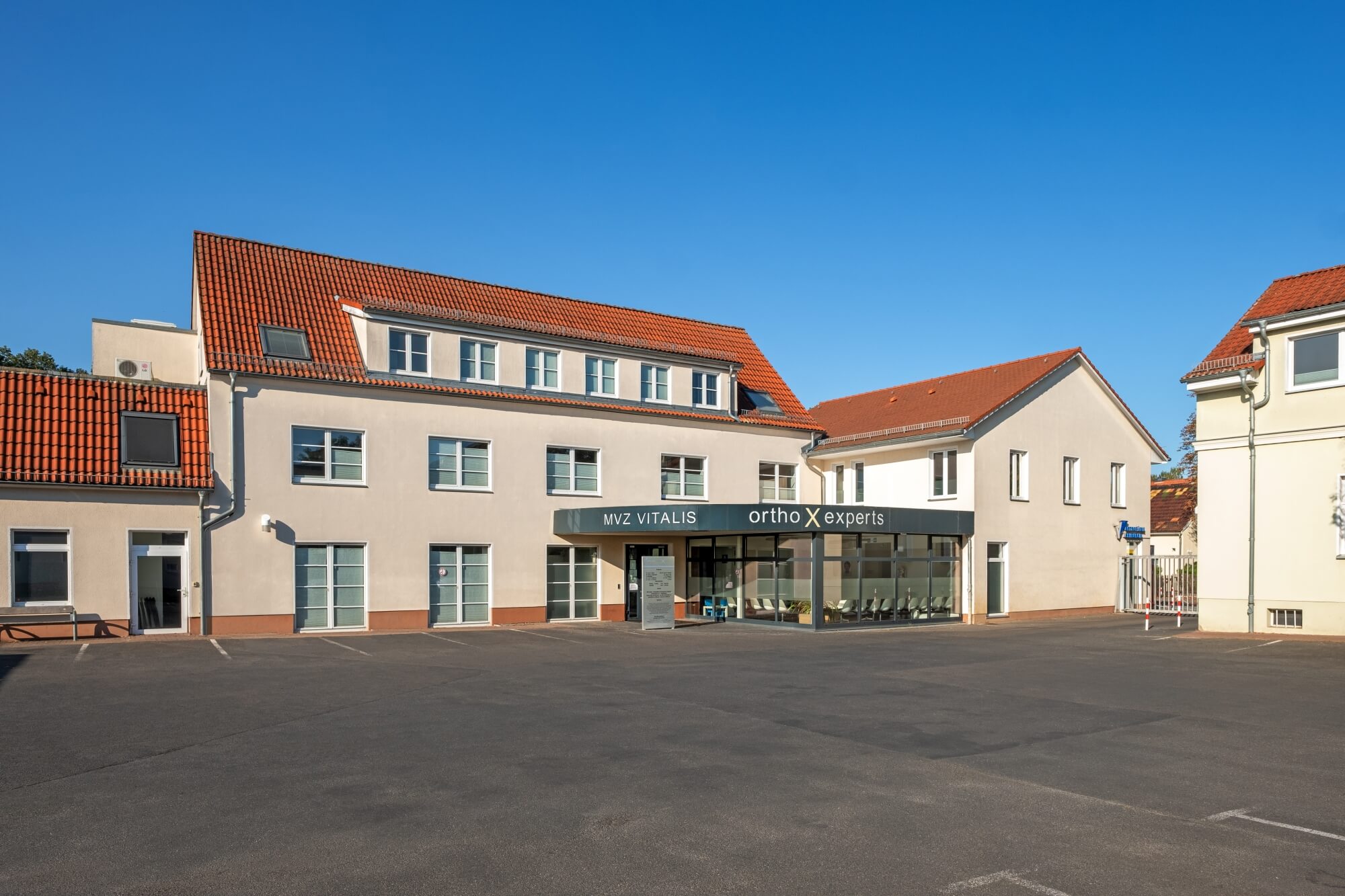
At MVZ VITALIS in Berlin-Buckow, we advise you on knee replacement, assess the medical necessity and support you from diagnosis and surgical planning through to aftercare.
When a knee replacement may make sense
Not every case of knee osteoarthritis requires surgery. Many symptoms can initially be treated conservatively, for example with physical therapy, exercise, pain therapy, injections or offloading. A knee replacement is usually only considered once these measures are no longer sufficiently effective.
Typical reasons for a knee replacement include:
When the cartilage is severely worn and bone rubs on bone, persistent pain and significant limitations in movement can result.
Surgery may be an option when pain occurs not only under load but also at rest or at night.
Many patients can no longer bend or straighten the knee properly. A feeling of instability in the leg can also play a role.
With pronounced bow-legged or knock-kneed alignment, the load within the joint can shift further and worsen the symptoms.
The X-ray alone is not decisive. What matters is how much pain, mobility and physical capacity are actually limited in everyday life.
Diagnosis and consultation before knee replacement
A knee replacement is preceded by a thorough examination. Our specialists assess mobility, stability, leg alignment, pain points, gait and the load-bearing capacity of the knee joint. Previous injuries, meniscus surgery, cruciate ligament injuries or cartilage damage are also taken into account.
Depending on the findings, diagnostics include X-rays, MRI scans or further examinations. It is important that symptoms, examination and imaging are consistent. Only then can it be reliably assessed whether an artificial knee joint makes sense or whether conservative measures should remain the focus.
During the consultation, we discuss which prosthesis is suitable for you, how the surgery works, what risks exist and what result you can realistically expect.
What types of knee replacements are there?
A knee replacement does not always replace the entire knee joint. Which treatment is suitable depends on which joint surfaces are damaged, how stable the ligaments are and whether the kneecap is also affected.
With a resurfacing prosthesis, the worn joint surfaces of the thighbone and shinbone are replaced. Depending on the findings, the back surface of the kneecap may also be addressed. This prosthesis is usually an option when several parts of the knee joint are affected by osteoarthritis but the ligaments still provide sufficient stability.
A unicompartmental (partial) knee replacement replaces only one part of the knee joint. It may be suitable when osteoarthritis is clearly limited to one compartment, for example the inner or outer side of the knee joint. The prerequisite is that the remaining parts of the joint, the ligaments and the leg alignment are compatible with a partial prosthesis.
In some cases, a custom-made knee prosthesis may be an option. The prosthesis is planned based on the patient's individual anatomy, for example using three-dimensional imaging.
How does knee replacement surgery work?
The operation is carefully planned in advance. X-rays, leg alignment, bone quality, ligament stability and the damaged joint surfaces are assessed. The goal is to select the right prosthesis and to align the knee so that it is as stable and resilient as possible.
During the procedure, the damaged parts of the joint are removed and replaced with artificial components. Depending on the findings, this is either a partial prosthesis or a total knee replacement (TKR). Muscles and soft tissue are preserved as much as possible.
Aftercare and rehabilitation
After the knee prosthesis has been implanted, mobilization usually begins early. During aftercare, we check wound healing, swelling, pain progression, mobility and load-bearing capacity. Physical therapy, pain therapy and a controlled increase in load help you regain strength and stability in the leg step by step.
Many patients also need a rehabilitation program after surgery. The goal is to move the knee safely again, build up the muscles and cope well with everyday demands. How soon walking, climbing stairs, driving, work or sports are possible again depends on the procedure, the healing process and your individual starting point.
Knee surgeon Prof. Dr. med. Hanno Steckel
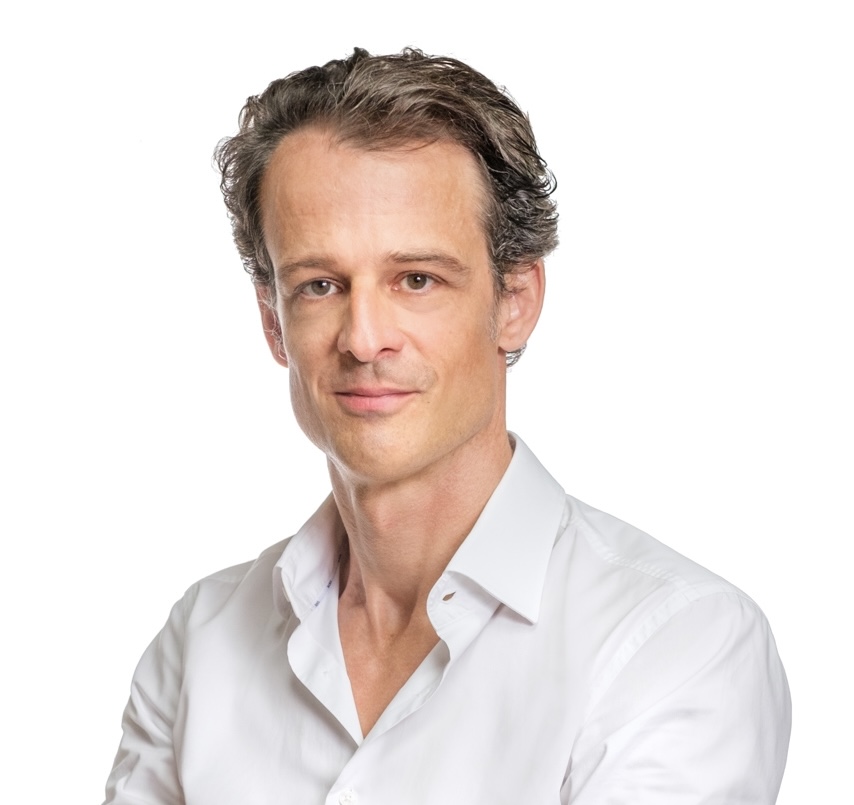
Knee replacement surgery performed by Prof. Dr. med. Hanno Steckel is a dedicated specialty at MVZ VITALIS.
He is a specialist in orthopedics and trauma surgery, rheumatology and special orthopedic surgery. His focus is on knee surgery, knee replacement and the treatment of complex knee conditions.
Prof. Dr. med. Hanno Steckel is lead surgeon at the joint replacement center of Westklinik Dahlem in Berlin. Over the course of his career, he has performed countless knee procedures and implanted more than 1,000 knee prostheses. He is a certified knee surgeon of the German Knee Society and an "Expert Knee" of the Society for Arthroscopy and Joint Surgery (AGA).
Good to know for patients
FAQ on knee replacement surgery
A knee replacement may make sense when the knee joint is severely damaged by osteoarthritis, there is severe pain and conservative treatments no longer help sufficiently. The deciding factors are symptoms, mobility, load-bearing capacity and the findings on X-ray or MRI.
The lifespan of a knee prosthesis varies from person to person. Many prostheses last for many years. Influencing factors include bone quality, body weight, activity level, type of prosthesis, surgical technique and everyday stress on the joint.
Knee prostheses that have already been implanted can also cause problems over time. Reasons for revision surgery can include loosening, wear, instability, pain or, in rare cases, an infection. Whether a revision makes sense is decided based on symptoms, examination and imaging.
Revision surgery on knee replacements is more demanding than the initial procedure. It requires precise diagnostics, careful planning and experience with revision systems.
A unicompartmental (partial) knee replacement replaces only one part of the knee joint, usually the inner or outer side. A total knee replacement (TKR) replaces larger parts of the knee joint. Which treatment is right depends on how far the osteoarthritis has progressed.
As with any surgery, risks and complications can occur. These include bruising, postoperative bleeding, infections, thrombosis, wound healing problems, limited mobility, persistent pain or loosening of the prosthesis. In general, pain after surgery is normal, especially in the first days and weeks.
Recovery varies from person to person. It often takes several weeks before everyday activities, walking and climbing stairs feel more secure again. Full recovery can take several months.
In many cases, weight is put on the operated leg early on under guidance. How soon and how much weight may be applied depends on the surgery, the type of prosthesis, bone quality and your doctor's recommendation.
Many sports activities are possible again after healing, especially joint-friendly activities such as cycling, swimming or hiking. Please discuss sports with high impact loads or rapid changes of direction individually with your treating physician.
Would you like to find out whether a knee replacement is an option for your symptoms? Then feel free to book an appointment at MVZ VITALIS in Berlin-Buckow.
Book a consultation now
Do you have severe knee pain or advanced knee osteoarthritis, or has a knee replacement already been recommended to you? Then feel free to book an appointment at MVZ VITALIS in Berlin-Buckow.
During the consultation, we assess whether an artificial knee joint makes sense in your situation, which type of prosthesis is suitable and what the next treatment steps are.